ISSUES
 Much has changed in London since these films were made. Sparrows, which were the most common city birds are now hard to find. Their population has decreased by 62 percent since the 1980s. The city has got hotter, cars have got bigger, money to care for wildlife has become scarcer.
STREET TREES
 Planting trees by the side of the road and parks in Britains cities began in the 17th century, along the Mall and in St James Park in London. In the late 19th century town tree planting began to take off, with planes, horse chestnut and limes being the most popular, planted usually in parks and squares. These trees have an abundant growth and did not sit well on narrow pavements and streets. Street trees need to be small, do not bear fruits, are long living, hardy and disease resistant. Spring cherries. native to Japan, were once popular for their spring colour, but bloom for a short time and need maintenance. Trees planted now are usually native trees, as they establish themselves quickly and will grow without much attention, hornbeam, beech, hawthorn and laburnum, sycamore, white beam and rowan.
 A tree absorbs water and minerals through their roots to make sap. The sap travels through the tree to the leaves. The leaves absorb CO2 and light. The leaves use chlorophyll and the sun's energy to convert CO2 and water into glucose. Oxygen is released and the glucose nourishes the tree carried in the sap. This process is called photosynthesis. Street trees offer shade, reduce ambient temperature, absorb CO2 and offer a home for birds and other animals while breathing out oxygen through this natural process of photosynthesis.
So why plant trees?
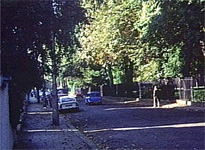 Trees provide shade and reduce temperature. A tree lined street will reduce the ambient summer temperature by 4 degrees centigrade and the temperature of the surface of the shaded pavement by 12 degrees centigrade. In a house this natural cooling effect will reduce power consumption of cooling systems in the summer and acting as a windbreak, reduce heating needs in the winter. Trees reduce a house owner's electricity bill. Birds and other animals make their home in trees. A garden is much richer for the birdsong that surrounds a house. Trees look after the soil around it. Falling leaves build up compost as invertebrates feed on the compost further enriching the soil.
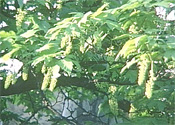 Of all their gifts one has become all important. Trees and other plants absorb 25% of man made CO2. Normal amounts of CO2 in the atmosphere was 290 parts per million. Today CO2 levels are 405 parts per million. It is the excess co2 in the atmosphere that is one of the causes of rising temperatures and unpredictable sometimes extreme weather events. Trees absorb co2 through pores in their leaves called stomata, balancing carbon absorbtion with water loss and store the carbon in their leaves, branches, trunks and rootes. 50% of a tree is water ( 20% of which is in the roots) and 50 dry mass. Carbon is stored in the trees dry mass of which 47.5% is stored carbon. A tree 30 to 40 years old weighing about a ton will absorb an average of 25 kg of co2 each year.
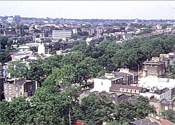 This is what trees do for us. Soil conservation. Water balance. Carbon sequestration. Wildlife maintenance. Climate change mitigation.
Without trees providing shade and coolness who would want to walk along a street in 35 degree heat, and if people do not have any incentive to walk or cycle, they will take to their cars, undoing any co2 reduction the trees may have provided. But the car always has precedent over the pedestrian. An air conditioned car offers us a comfortable option on a hot day. Cars, the size of a world war two tank, give the drivers visibility and status. A single person weighing 200lbs is transporting him/herself in box weighing 6,0000lb, 300 times his/her own weight. An SUV will emit 14% more co2 than a smaller car. In spite of this SUVs make up 40% of new car sales. SUVs were the second largest cause for the rise of co2 emissions over the past decade, greater than industry and aviation. One liter of petrol emits 2.3kg of co2. One liter of diesel 2.64 kg.Over their 15 year life span all the SUVs sold in Europe will belch out 192 million tonnes of co2, equal to the annual co2 output of an entire country. In addition to CO2 emissions cars dramatically increase nitrogen dioxide levels (NO2), a poisonous gas that causes respiratory infections.
During the pandemic, when towns were in lock down, European cities recorded 50% to 60% reduction in NO2, up to 87% reduction in CO2.
Residential roads can be given back to the residents without an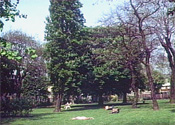 y major cost, reducing these pollution levels. Wider roads can be narrowed, simply by placing boxes with plants at intervals a meter or so away from the pavement on either side of the road, allowing walkers to walk on the even tarmac. Pavements planted with trees for shade. Benches installed to rest on a hot day. One way streets and road humps introduced to control the flow and speed of traffic. This has been done already in so many European towns.
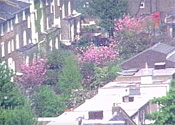 Streets, pavements and town squares are in the orbit of the town council and they are responsible planting and caring for trees. Planting trees in our back gardens are our choice.
Without any intervention towns will become hotter. Increased levels of CO2 lead to higher temperatures. Annual temperatures are set to rise by 2C in the next thirty years, in the summer by 3C. Heat waves are common now, reaching 35C, sometimes even higher.
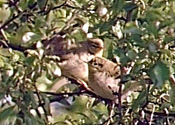 Trees can absorb only so much co2 before they become saturated and stop photosynthesizing. Drought will reduce photosythesis so newly planted trees need to be tolerant of drought and variable weather conditions, able to adapt to different soil types and ideally be native trees so that they provide a home for insects and birds who have already set up associations with certain trees to feed and nest. These trees will need to be watered regularly especially in their first years while they establish root systems deep enough to draw up enough water themselves.
Town trees should above all need to be effective at reducing co2. The average mature tree will absorb 25 kg of co2 per year. Broadleaved trees with a wide canopy that develop dense trunks and branches are best suited to absorb co2. The co2 absorbtion of trees will vary depending above all on the trees age, which will determine its root size, wood density, the size of its canopy and the amount of leaves. Trees with a trunk diameter more than 77cm will capture 90 times more co2 than a smaller tree with a trunk diameter less than 8cm.
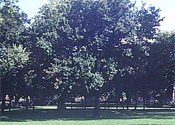 But to give perspective. One liter of diesel emits 2.64 kg of co2. The average mature tree absorbs an average of 25kg of co2 per year. Planting trees cannot resolve the crisis of increasing levels of climate warmimg chemicals in the atmosphere.
Traffic needs to be calmed as new roadside trees are planted for the sake of walkers and drivers. Trees make our lives better.
If you have something to say, an issue to raise, then make contact and if its printable it will be posted on this page